Powerful vs. Powerless

Social class is a system put in place to distinguish between the powerful and powerless. By incorporating religion, the economy, and whatever else into the social classes one is allowing for a further division between the social classes to form. Mr. Brocklehurst is a prime example of a powerful member of society exerting his power simply because he can. Miss Temple represents the powerless and how she must put up with the rules and regulations placed upon her by Mr. Brocklehurst. The idea of social power and social inferiority helped to shape this chapter of Jane Eyre.

The breakfast represents discipline in true believers in Christianity. By believing that the superiors of your life will provide for you shows that one has a strong connection with their religion. This may or not be true but one can speculate that if these women don't eat and just hope that they will be taken care of then they will become malnourished and a burden upon the household they are serving due to their inability to work due to lack of nutrition. We as the audience know that it is unreasonable to assume that these women can survive off of bread and water but Mr. Brocklehurst thinks they can if they remain faithful to their religion of Christianity.
For Mr.Brocklehurst, by practicing self-control one becomes closer to God and in turn, becomes better workers. His belief is that God is okay with him starving his housemaids because it is strengthening their relationship with God. He uses his power as master of the house to implement his rules and regulations. He claims to be very religious and wants his employees to be religious as well. His analogy regarding the ill-prepared breakfast was to amplify his superiority while also trying to maintain a sense of uniformity within his household. This interaction between himself and Miss Temple proves that he is self-conscious about his superiority but will do anything to maintain it.
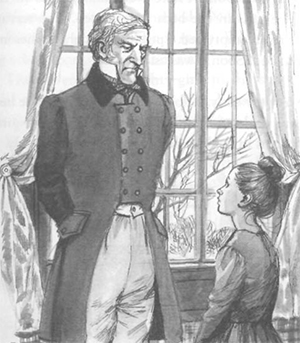
Miss Temple is the teacher at the Lowood Institute and she is employed by Mr. Brocklehurst. She does not believe that it is smart to starve the women who are at the Lowood Institute, regardless of what God says. She does not want the women in the house to suffer even though they are the workers of the household. This shows that religion is not as important to her as it is to her employer Mr. Brocklehurst. Miss Temple does not use religion as a way to validate her decisions. She is seen as being inferior to Mr.Brocklehurst and endures his long speech regarding food to religion due to her status in the house.
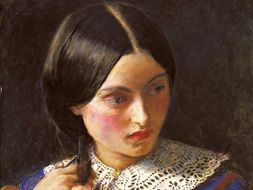
The attitude of both Mr. Brocklehurst and Miss Temple displays the idea of social structure in the 19th century. The social structure of this century is mirrored at the Lowood Institute, through Mr.Brocklehurst who portrays the high class and Miss Temple who portrays the working class. This social structure at the Lowood Institute is strengthened through the idea that men are superior to women in both the workplace and in society. The author thus believes that men blame other things for their actions and believe that they are superior to women. However, this also shows that women at this time are very resilient and put up with a lot from men in order to find their place in society and thrive in that place. In conclusion, the author uses the characters of Mr.Brocklehurst and Miss Temple to mirror the social hierarchy of the 19th Century.


Hey! This was really well written and I really liked all of the different visuals you had, it made it a lot easier to follow and added in more detail to aid in understanding which is always great. One thing I did notice was that you didn't have any links in the text, which I know is part of the rubric. But, seeing as how I used my freebie on this post I don't know how pertiant links would've been so overall really good job!
ReplyDeleteHey Morrigan! I loved your blog! I really enjoyed how you used visuals to guide the reader and also be creative in the sense that we can fully understand what you are talking about. I did a blog similar to yours about the powerful and the powerless, but you included the social hierarchy, which I loved to read about and be educated on. You included a lot of historical background which was really insightful and interesting too! Overall, nice job on your post!
ReplyDeleteMorrigan, this was a super cool post! I loved the visuals you incorporated and how they connected to your thoughts and ideas presented. I agree with a lot of what you said and I as well incorporated this concept of gender roles as well as social class throughout the Victorian era in my post! I think everything was coherent and clear, but I do agree with Sammy that you need links. Overall though, great work!
ReplyDeleteHey Morrigan! I love how you structured this post. It was really easy to follow and understand. I think the incorporation of photo enhanced your post. Your arguments were clear and the background was really helpful in this. I enjoyed reading this as it was both interesting and organized. Nice job!
ReplyDeleteMorrigan, great blog post! Having chosen a different question, I enjoyed reading your post because it developed my understanding of the text even more. I also really liked your use of pictures in your post because it helps the reader visualize the setting and what you are saying. It also helped break the text which enhances understand and makes it more enjoyable to read. Good job!
ReplyDeleteGreat blog post Morrigan! It was very fell organized and was very insightful overall! I like the context that you gave about the social structure and all of the visuals that you included. I loved that you looked at the symbolism in the Lowood Institute and what it represented overall in society. It was very organized, well-written and easy to follow! Great job overall!
ReplyDeleteMorrigan, you did such a good job with this blog post! The visuals were really interesting and they helped me to follow along with your writing. Your analysis of Mr. Brocklehurst as self-conscious was something I hadn't considered, but I think you explain it well. I also liked your conclusion about how this text demonstrates gender relationships at the time. Well done!!
ReplyDeleteMorrigan, I think your blog is very well structured and does a good job analyzing the chapter. I came to similar conclusions you did about the symbolism of characters representing social classes. I also like that you included connections about the story and gender roles in society at the time. Overall it was very good.
ReplyDeleteNice job overall, especially with the visuals as they added to the flow. I'm really tired and it's almost midnight so imma keep it brief, but here are some general pointers. Your contextualization was more than sufficient, so for next time I would say gear some of that space towards deeper analysis and connect those to centralized themes. I actually didn't know Lowood was an institute so that makes more sense, but you connected the social dynamics within Lowood to a broader idea of social hierarchy which was great. Keep up the good work!
ReplyDelete