The Precious Box
This box was used during the era of 1173-1180 in Great Britain comprised mostly of gilded silver with niello and a glass cabochon set over a tinted foil. The box was 5.5 x 7 x 4.7 cm and the interior is 3.4 x 6.5 x 3.7 cm. It was created to house a relic of the English Saint Thomas Becket, he was the archbishop of Canterbury from 1162 to 1170. He was known at the time and now for his problems between the king of England at the time King Henry II. The main problem was between the separation of church and state. Due to the increase in tension that these problems caused King Henry II authorized the execution of Thomas Becket. Becket was killed by four of King Henry II's knights on December 29th, 1170 in Canterbury.
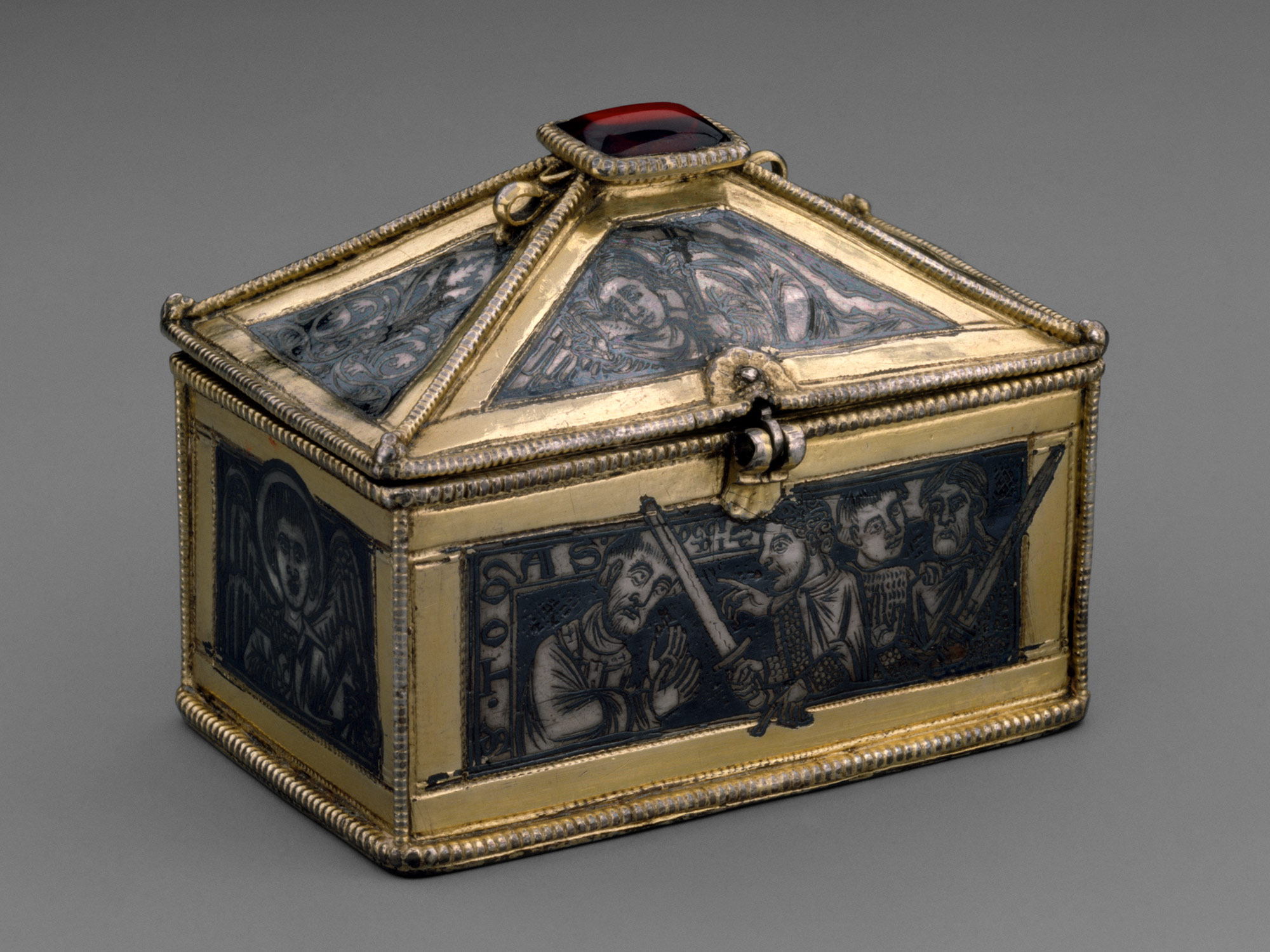
The box is comprised of many important details but the obvious one is the mural portrayed across the majority of the outside of the box, which displays the martyrdom of Saint Thomas Becket. Across the front of the box on the rectangular portion, one can see the four knights capturing Saint Thomas Becket while the triangle above said rectangle displays an angel which is blessing the event of the capture of Saint Thomas Becket. On another side of the box is an image depicting the deceased body of Saint Thomas Becket while the triangle panel above it shows an angel cradling a baby. This is representative of Saint Thomas Becket rising to heaven to live in the afterlife among the angels. The box was seemingly the first piece of art commemorating the sainthood of Thomas Becket.
The inscriptions on the box were "Saint Thomas is killed" and also inscribed was "The blood of Saint Thomas" which is important to the art and how it connects with the audience. The box is painted with gold around the trim with the images of Saint Thomas portrayed in black and white. The gold is typically associated with magic, prosperity, courage, and wisdom. This mirrors how the people who idolized Saint Thomas truly felt about him, they thought he was powerful and courageous and full of wisdom. The images are presented in black and white, the black is representative of strength power and authority while the white is represented of purity, light, goodness, heaven, safety, and spirituality. This contrasts the black in some ways for it represents the angelic nature of Saint Thomas and the religious association in which the people of England portrayed him. There are also parts of the paintings that are gray and represent the themes of loss and depression which mirror how the people of England who followed Thomas Becket felt following his death.
The most important aspect of the piece is the shape of the box. The rectangular pyramid shape of the box mirrors that of many other religious structures such as that in Egypt. Egypt buried their pharaohs and queens in the pyramids in hopes of bringing them the same prosperity in the afterlife as they did in life. This can be seen in the work of art, supposedly Thomas Becket's blood lies within the box so the pyramid mirrors that of the Egyptians view of the afterlife, he will have prosperity in death which he may not have had in life.
Another aspect of this art piece is the ruby on the very tip of the pyramid-shaped box. Rubies are typically associated with energy and power much like that of the color gold which surrounds the outline of the box. The ruby shows that the energy of Saint Thomas Becket will continue to live on even after his death.
 (Ignore my horrendous drawing)
The title of the work is "Reliquary Casket with Scenes From the Martyrdom of Saint Thomas Becket" this title shows Thomas Becket's importance to religion in England both at the time of his death and now. The meaning of this piece is "power after death" this can be seen from the images on the box and the importance both religious and otherwise that the box represents are still valid now as it was back in ancient British times.
The box is comprised of many important details but the obvious one is the mural portrayed across the majority of the outside of the box, which displays the martyrdom of Saint Thomas Becket. Across the front of the box on the rectangular portion, one can see the four knights capturing Saint Thomas Becket while the triangle above said rectangle displays an angel which is blessing the event of the capture of Saint Thomas Becket. On another side of the box is an image depicting the deceased body of Saint Thomas Becket while the triangle panel above it shows an angel cradling a baby. This is representative of Saint Thomas Becket rising to heaven to live in the afterlife among the angels. The box was seemingly the first piece of art commemorating the sainthood of Thomas Becket.
The inscriptions on the box were "Saint Thomas is killed" and also inscribed was "The blood of Saint Thomas" which is important to the art and how it connects with the audience. The box is painted with gold around the trim with the images of Saint Thomas portrayed in black and white. The gold is typically associated with magic, prosperity, courage, and wisdom. This mirrors how the people who idolized Saint Thomas truly felt about him, they thought he was powerful and courageous and full of wisdom. The images are presented in black and white, the black is representative of strength power and authority while the white is represented of purity, light, goodness, heaven, safety, and spirituality. This contrasts the black in some ways for it represents the angelic nature of Saint Thomas and the religious association in which the people of England portrayed him. There are also parts of the paintings that are gray and represent the themes of loss and depression which mirror how the people of England who followed Thomas Becket felt following his death.
The most important aspect of the piece is the shape of the box. The rectangular pyramid shape of the box mirrors that of many other religious structures such as that in Egypt. Egypt buried their pharaohs and queens in the pyramids in hopes of bringing them the same prosperity in the afterlife as they did in life. This can be seen in the work of art, supposedly Thomas Becket's blood lies within the box so the pyramid mirrors that of the Egyptians view of the afterlife, he will have prosperity in death which he may not have had in life.
Another aspect of this art piece is the ruby on the very tip of the pyramid-shaped box. Rubies are typically associated with energy and power much like that of the color gold which surrounds the outline of the box. The ruby shows that the energy of Saint Thomas Becket will continue to live on even after his death.

The title of the work is "Reliquary Casket with Scenes From the Martyrdom of Saint Thomas Becket" this title shows Thomas Becket's importance to religion in England both at the time of his death and now. The meaning of this piece is "power after death" this can be seen from the images on the box and the importance both religious and otherwise that the box represents are still valid now as it was back in ancient British times.


Hey Morrigan, I think you did a great job on this blog. You go into great detail about the piece and explain it in a very understandable and concise way. I could tell from reading that you did a lot of research concerning the piece. I also really like how you put links within the post to certain subjects concerning the piece, I think this is very helpful. Overall really good job!
ReplyDeleteNice job thinking about the WHAT-HOW-and-WHY- you were careful to not just jump into a larger understanding, instead thinking about what you see on the surface and then connecting that to the context.
ReplyDelete